
SEO for Photographers Course: Rank Higher on Google in 60 Days
A photography SEO course that helps you rank higher, get found, and book more clients without becoming a SEO expert.
You didn’t become a photographer to learn algorithms. You became one to create. This course makes sure your work doesn’t stay invisible online.
60-Day Measurable Growth Guarantee. Implement the system, see results, or your money back.
photographer testimonial
"When I started the course in mid-November, I was pulling in a pretty pathetic number of clicks from Google Search: we're talking 1 to 3 on a good day. By November 30th, just two weeks in, I had hit 40 clicks in a rolling 30-day window. As of now, I'm at 198 clicks in the last 30 days and still climbing... Beyond clicks, my impressions (how often Google is actually surfacing my site in search results) jumped from roughly 200 per day to consistently hitting 500 to 750. My average ranking position improved from around page 2 into the top 10 for several key searches."- Andrey Boltyansky, Swanky Bolt Studios (read the full case study)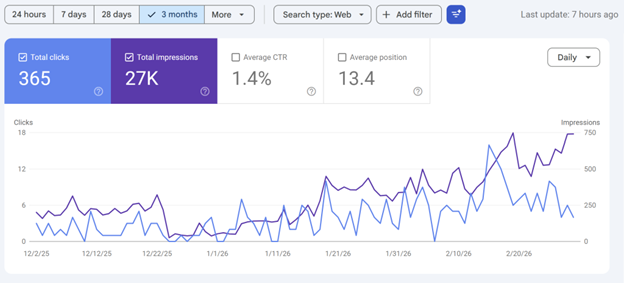
What is SEO for Photographers?
SEO (Search Engine Optimization) for photographers is the process of making your photography website visible when potential clients search Google for services like "wedding photographer in [your city]" or "family portrait photographer near me."
Here's the reality: while you're posting daily on Instagram hoping the algorithm shows your work, your competitors are ranking on page one of Google, capturing clients who are actively searching and ready to book.
The difference? Intent.
Social media users scroll for entertainment. Google searchers have intent—they're looking for a photographer right now. When your website ranks for the right keywords, you're not interrupting someone's feed. You're answering their search at the exact moment they need you.
Why Most Photographers Struggle with SEO
Most SEO advice is written for bloggers or e-commerce sites, not photographers with image-heavy portfolios and location-based clients. Generic tips about "keyword density" and "backlink strategies" don't account for how photography businesses actually work.
Many photographers don’t realize that even great work gets buried online without the right structure, which I break down in why great photography websites stay invisible.
You need a photographer-specific approach that addresses:
How to optimize image-heavy galleries without slowing your site
Which local keywords actually drive bookings (not just traffic)
How to rank for your city + photography niche combination
Simple blog strategies that convert readers into inquiries
Quick SEO Wins You Can Implement Today
You need a photographer-specific approach that addresses:
Add location keywords to your homepage title (e.g., "Cleveland Wedding Photographer") If you want a deeper walkthrough of how to structure your homepage and service pages, see my photography website SEO guide.
Optimize your image file names before uploading (use "bride-groom-ceremony.jpg" instead of "IMG_1234.jpg").
Claim your Google Business Profile and keep it updated with recent work. For step‑by‑step examples of improving local visibility, here are some simple local SEO wins photographers can use right away.
Write one blog post answering a question your ideal clients ask. If blogging feels overwhelming, this breakdown of blog SEO for photographers shows how to turn simple posts into client‑driving assets.
Add alt text to your portfolio images describing what's in each photo
These five changes alone can start improving your visibility within weeks. But if you want the complete system that gets you ranking consistently and booking more clients, that's exactly what this course delivers.
You’re a talented photographer.
People love your work.
but your inbox stays empty.
I know exactly how it feels to create amazing work that nobody sees. I’ve been there.
When I first built my photography site, I poured everything into it, the design, the copy, the galleries. It looked perfect. But the inquiries didn’t come.
Weeks turned into months.
My site sat there like a beautiful ghost town. No traffic, no leads, just silence.
I thought maybe I needed to post more on Instagram. Or maybe my work just wasn’t “good enough.”
Before photography became my full-time creative focus, I spent years working at marketing tech companies selling and implementing SEO and earned media software for clients who needed real results. I learned exactly what makes Google pay attention… and what makes it ignore you. I explain this mindset shift more deeply in why photographers should learn SEO.
So I stopped guessing. I took what I knew, focusing on SEO for photographers and photography website SEO, and applied those same principles to my own website to attract clients locally. And it worked.
Once I implemented changes to make Google see my work, how to rank for what my ideal clients were actually searching for, everything changed. Within months, my site was ranking locally, inquiries came in consistently, and bookings followed. It wasn’t luck. It was strategy.
Below are real screenshots (12/10/25) from my Google Search Console Performance over the past 6 months.

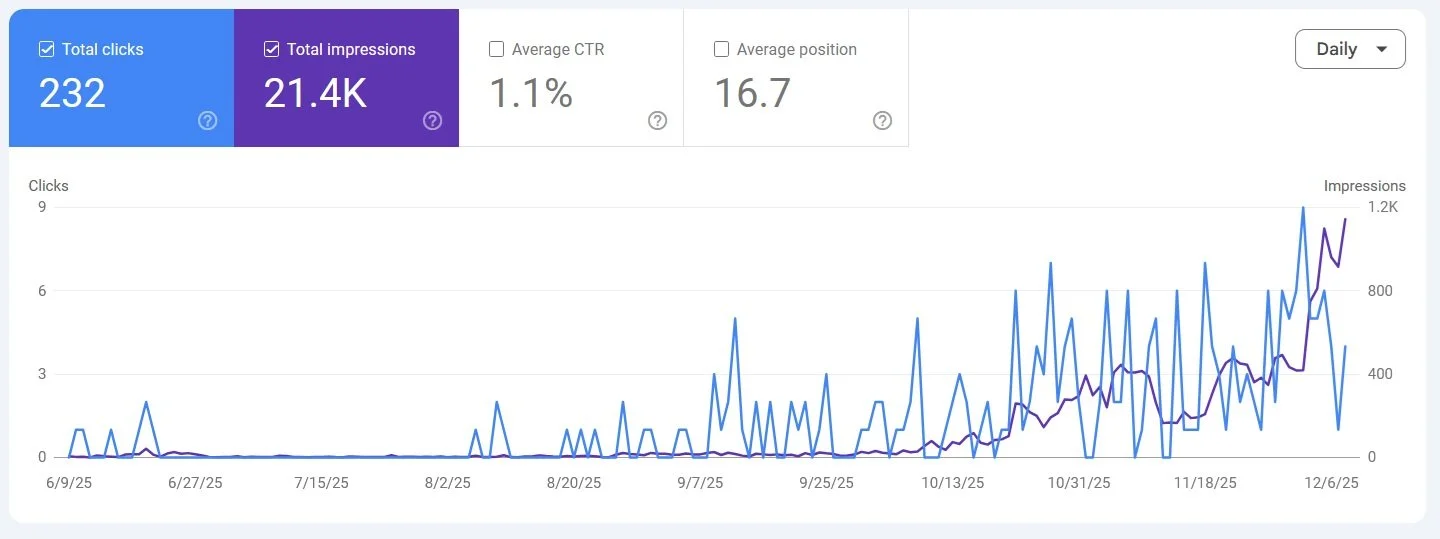
I built this course because I saw too many talented photographers struggling to get seen online. This isn’t theory. It’s the exact process I used to grow visibility, bookings, and brand awareness using SEO, simplified for photographers.
If you want fluff, this isn’t it.
If you want a clear roadmap to get found online, this is it.
If You’re a Photographer and Nobody’s Finding You on Google… That’s Not Your Fault
Most photographers rely on word of mouth or social media.
But the truth? Social media is fleeting.
Algorithms shift. Engagement drops. People scroll past your photos in seconds.
Meanwhile, the photographers showing up on page one of Google aren’t necessarily better than you. They’re just visible.
And visibility equals opportunity.
If your website isn’t showing up when someone searches “Cleveland wedding photographer” (or whatever your city and niche is), you’re losing bookings to someone else. Probably someone with less talent, but better strategy.
It’s painful to admit, but it’s fixable.
Why SEO for Photography Websites Requires a Different Strategy
If you’ve ever Googled “how to do SEO,” you’ve probably seen a mess of jargon: keywords, backlinks, metadata, site audits.
Most SEO help for photographers was written for marketers, not photographers, and it skips over what really matters.
Photographers have image-heavy sites, portfolio pages instead of blog funnels, and location-based clients.
That means 90% of the generic SEO advice out there just doesn’t apply.
You don’t need a master’s in marketing. You need a clear, photographer-specific roadmap.
That’s exactly what SEO for Photographers 101 gives you.
That's why this course focuses exclusively on photography website SEO, not generic marketing tactics. You'll learn the exact keyword research process for photographers, how to optimize image-heavy pages without technical skills, and how to create blog content that ranks and converts. No jargon, no overwhelm, just a clear roadmap built specifically for your business.
How This Photography SEO Course Gets You Found on Google
SEO for Photographers is a step-by-step course that teaches you how to rank higher on Google and get discovered by clients actively searching for your services.
It's built by a photographer (me) who's implemented these exact strategies to go from invisible to consistently booked—not an agency that doesn't understand the photography business.
You’ll learn how to:
Identify the exact keywords your clients are already searching. If you want to preview what those look like, here are photography keywords that bring clients.
Optimize your website structure and images for search (without code).
Write simple blog posts that actually rank and drive leads.
Build authority so Google trusts your site.
Track progress, measure growth, and celebrate wins.
No fluff. No technical overwhelm. Just a clear path from invisible to booked.
What You’ll Learn Inside the SEO for Photographers Course
-
Module 1
The SEO Mindset
Understanding how search engines think and why photographers have a unique advantage. Rank your website for location-based keywords. -
Module 2
The SEO Photography Keyword Goldmine
Find the best SEO keywords for photographers people actually search for in Google. -
Module 3
On-Page SEO Simplified
Optimize SEO for photos on your homepage, galleries, and blogs for visibility. -
Module 4
Local SEO Mastery
Ranking for your city and showing up in Google Maps. -
Module 5
Blog Strategy That Converts
Turning storytelling into leads (even if you hate writing). -
Module 6
Technical SEO (Without the Tech Headache)
The simple setup to make your site faster and more searchable. Turn clicks into inquiries and inquiries into booked sessions. -
Module 7
Authority & Backlinks
Building credibility in your niche the right way. -
Module 8
Track, Measure, Win
Using free tools to track rankings and stay ahead of competitors.
Common SEO Mistakes Photographers Make
(And How to Avoid Them)
After working with dozens of photographers on their SEO, I've seen the same mistakes repeated over and over. Here are the biggest ones, and how this course helps you avoid them:
Mistake #1: Targeting the Wrong Keywords
Most photographers optimize for terms like "best photographer" or "professional photography" keywords that are too competitive and too vague. You'll learn how to find location-specific, niche keywords that actually drive bookings.
Mistake #2: Ignoring Local SEO
If you serve clients in a specific city or region, local SEO is your biggest opportunity. Yet most photographers skip Google Business Profile optimization, local citations, and location pages entirely. Module 4 fixes this.
Mistake #3: Image-Heavy Sites with Zero Optimization
Your portfolio is beautiful, but if your images aren't properly named, compressed, or tagged with alt text, Google can't "see" them. You're essentially invisible. Module 3 shows you exactly how to optimize images without sacrificing quality.
Mistake #4: No Content Strategy
You don't need to blog daily, but you do need strategic content that answers what your ideal clients are searching for. Module 5 gives you a simple, sustainable blog framework that drives traffic and inquiries.
Mistake #5: Expecting Overnight Results
SEO isn't a quick fix—it's a long-term growth system. But with consistent implementation (1-2 hours per week), most photographers see measurable improvements within 4-8 weeks. This course gives you the roadmap and the 60-day guarantee to back it up.
The good news? Every one of these mistakes is fixable. And once you fix them, your website starts working for you 24/7—attracting clients while you're shooting, editing, or sleeping.
SEO Keywords for Photographers (Real Examples)
Most photographers guess at keywords, or worse, use the same generic ones everyone else uses. Inside the course, you’ll learn how to find keywords that match your niche, your location, and the clients you want to attract. Here are a few examples of the types of keywords photographers should be targeting:
Cleveland wedding photographer
Family photographer in Ohio
Engagement photos Cleveland
Newborn photographer near me
Senior portraits Cleveland
Event photographer Cleveland
Real estate photographer Ohio
Best places for photos in Cleveland
Cleveland photography mini sessions
Branding photographer for small businesses
You’ll learn how to find keywords like these for your own niche, how to use them naturally on your website, and how to build content that ranks for them long‑term.
Is This Photography Website SEO Course Right for You?
This SEO training for photographers is designed for anyone who wants to get found on Google without spending months trying to decode SEO jargon.
You already know what this course teaches, but who it’s really for makes all the difference.
If any of this sounds like you, you’re exactly where you need to be.
If you’ve ever thought, “My photos are strong, but no one’s finding me,” then you’re exactly who this was made for.
This course is for photographers who are ready to stop feeling invisible online and start showing up where clients are actually searching.
This Is for You If
You’re a photographer who wants your work to be found, not just scrolled past.
You’ve got a beautiful site, but the inquiries just aren’t coming in.
You’re tired of guessing what keywords or blogs will make a difference.
You want consistent bookings without relying on algorithms or ads.
You believe your art deserves to be seen and you’re ready to make that happen.
This Isn’t for You If
You’re looking for a quick fix or an overnight ranking miracle.
You’d rather hand everything off instead of learning how it works.
You’re not open to making small, meaningful changes to your website.
You expect results without putting your heart (and a little effort) into it.
Because this isn’t about gaming Google. It’s about building something real that keeps working long after you stop posting.
Best SEO Strategies for Photographers
Photographers don’t need complicated, technical SEO to rank. They need a clear, repeatable system that helps Google understand who they are, what they shoot, and where they work. These are the strategies that consistently move photography websites onto page one:
Optimize every page for one clear keyword. Pages rank best when they have a single focus, like “Cleveland wedding photographer” or “family photographer in Ohio.” This helps Google understand exactly what each page is about.
Use location‑rich content throughout your site. Google relies heavily on geographic signals. Adding neighborhoods, venues, parks, and cities you shoot in helps you rank for local searches and appear in Google Maps.
Write blog posts that answer real client questions. Posts like “Best Cleveland photo locations” or “What to wear for engagement photos” attract search traffic and build trust before clients ever reach out.
Add descriptive alt text to every image. Your photos are your product — and alt text helps Google “see” them. Describing the subject, location, and style improves both accessibility and rankings.
Build internal links that guide visitors (and Google) through your site. Linking your galleries, blog posts, and service pages together strengthens your site structure and helps Google understand your expertise.
These strategies form the foundation of any effective photography SEO course, including the system you’ll learn inside this one.
photographer testimonials
“Matt’s SEO course finally explained things I’d been guessing at for years. Clear, practical, and easy to apply. Even in the beta I saw early movement in Search Console and felt way more confident about how my site’s set up." - Scott Esterly, Esterly Photography

"I recently went through Matt Rutter’s online SEO course, and it made a huge difference for my visibility on Google. The course was super easy to follow, and the step-by-step guide made everything smooth and understandable. I especially appreciated the action steps—being able to immediately apply what I learned helped me actually make progress instead of just absorbing info. I learned a ton about how search engines work, and within a short time I already received an inquiry from someone I’ve never met about booking a shoot… and it’s the off-season! Thank you, Matt, for putting together such a practical, helpful course." - Shane McNicholas, Else Photo
Course Pricing & Enrollment
This Photography SEO Course is 8 self-paced modules designed specifically for photographers who want to attract more clients through Google search.

Why only $99
Because I want real SEO knowledge to be accessible, not locked behind thousand-dollar retainers or confusing jargon.
This course is priced low on purpose. It’s my way of helping as many photographers as possible understand how SEO really works and start getting found online. I’ve seen too many creatives struggle with visibility when the solution isn’t complicated. It just needs to be explained clearly.
It’s also part of a bigger vision: to build a loyal community of photographers who see real results, tell their friends, and help spread the word.
Eventually, the price will go up, but early supporters get lifetime access at this founding price. I want to make this decision a no-brainer for you.
“Can’t I Just Figure This Out Myself?”
You could, but here’s the reality: SEO isn’t hard, it’s just time-consuming to learn the right way. You could spend weeks of trial and error bouncing between YouTube videos, Reddit threads, and half-baked blog posts. Or you could follow a step-by-step system made specifically for photographers by someone who’s worked in the industry.
This course cuts straight to what actually works, giving you the exact steps to get your website ranking, attract clients, and build long-term visibility. All without paying a SEO specialist or agency hundreds (or thousands) of dollars per month.
The 60-Day Measurable Growth Guarantee
I know it might sound silly to offer a guarantee on something that’s $99, but that’s how confident I am in what this course delivers.
If you go through the lessons and apply the core steps, you’ll see measurable improvement in your visibility within 60 days of starting. If not, reach out and I’ll make it right. No runaround.
To qualify, you’ll simply show that you followed the system:
Completed the lessons
Updated your homepage title and meta description
Optimized your image filenames
Created your keyword list
Implemented one core action (a blog post using the framework or an updated Google Business Profile)
Verified your site in Google Search Console
If you’ve done the work and still aren’t seeing progress, email your screenshots and I’ll review everything personally.
I built this to help photographers win, not waste their time or money. When your photography is seen, your business wins.
Questions Photographers Ask Before Enrolling
Before joining this photography SEO course, photographers often ask a few common questions.
1. Do I need prior SEO knowledge, technical skills, or a new website?
Not at all. This course is built for photographers, not marketers or coders. Whether your website is brand new or years old, you’ll learn simple, repeatable steps to improve your photography website SEO without rebuilding your entire site or learning code. Everything is explained in plain language with examples made for creatives.
2. How much time will I need each week, and when will I see results?
Expect to spend about 1–2 hours a week applying what you learn. Most photographers start seeing measurable SEO improvements, like higher rankings or more inquiries, within 4–8 weeks, depending on how often they implement the changes. SEO is a slow-build system, but consistency compounds your results over time. I also show how to track and measure your SEO success using free tools.
3. Will this help me get more photography clients?
Yes. You’ll learn SEO for photography websites in a way that’s simple, clear, and focused on getting you more clients, not confusing technical jargon. Every module is focused on helping you attract clients through Google without relying on ads or constant social posting. You’ll learn how to target the best SEO keywords for photographers so your site appears when clients are actively searching for your kind of work. You can preview what those look like in these real keyword examples for photographers.
4. Is this course only for local SEO?
No. While there’s a strong focus on local visibility (so you show up in searches like “Cleveland portrait photographer”), you’ll also learn broader photography SEO principles that apply whether you shoot locally, regionally, or serve clients worldwide. The strategies you’ll learn in this photography SEO course apply everywhere, especially when it comes to local SEO for photographers who want to show up in Google Maps and city‑based searches. Everything you learn applies whether you shoot locally or travel, and the strategies inside this photography SEO course work for any niche. You can see how powerful this is in my breakdown of local SEO for photographers.
5. Do I need to write a ton of blog posts?
No, this isn’t about churning out content just to fill space. You’ll learn a sustainable approach to SEO for photographers where even a few well-optimized pages and blog posts can drive consistent traffic. Quality and strategy matter far more than quantity.
6. What kind of ongoing SEO help for photographers does the course provide?
The course includes lifetime access, so you can revisit lessons any time you’re updating your website. You’ll also learn easy ways to maintain your photography website SEO month to month without needing an agency or marketing degree.
You Don’t Need to Be “Lucky” to Get Booked. You Just Need to Be Found.
Every day you wait, someone else is showing up for the clients that should be finding you.
Stop letting your best work sit unseen in a digital black hole.
It’s time to take control of your visibility to get the bookings, recognition, and confidence your art deserves.
Join the photography SEO course trusted by photographers who want to rank higher on Google and book more clients consistently.
60-Day Measurable Growth Guarantee | No Fluff | No Risk
Built by a photographer who knows what it’s like to be invisible and how to fix it.